What Should You Do With Your Day in Stardew Valley?
Every morning you get one day and a farm full of options. Good news: the answer is way simpler than it looks. There is one best default for each stage of the game, one half hour you must never skip, and a handful of calendar days that beat everything else.
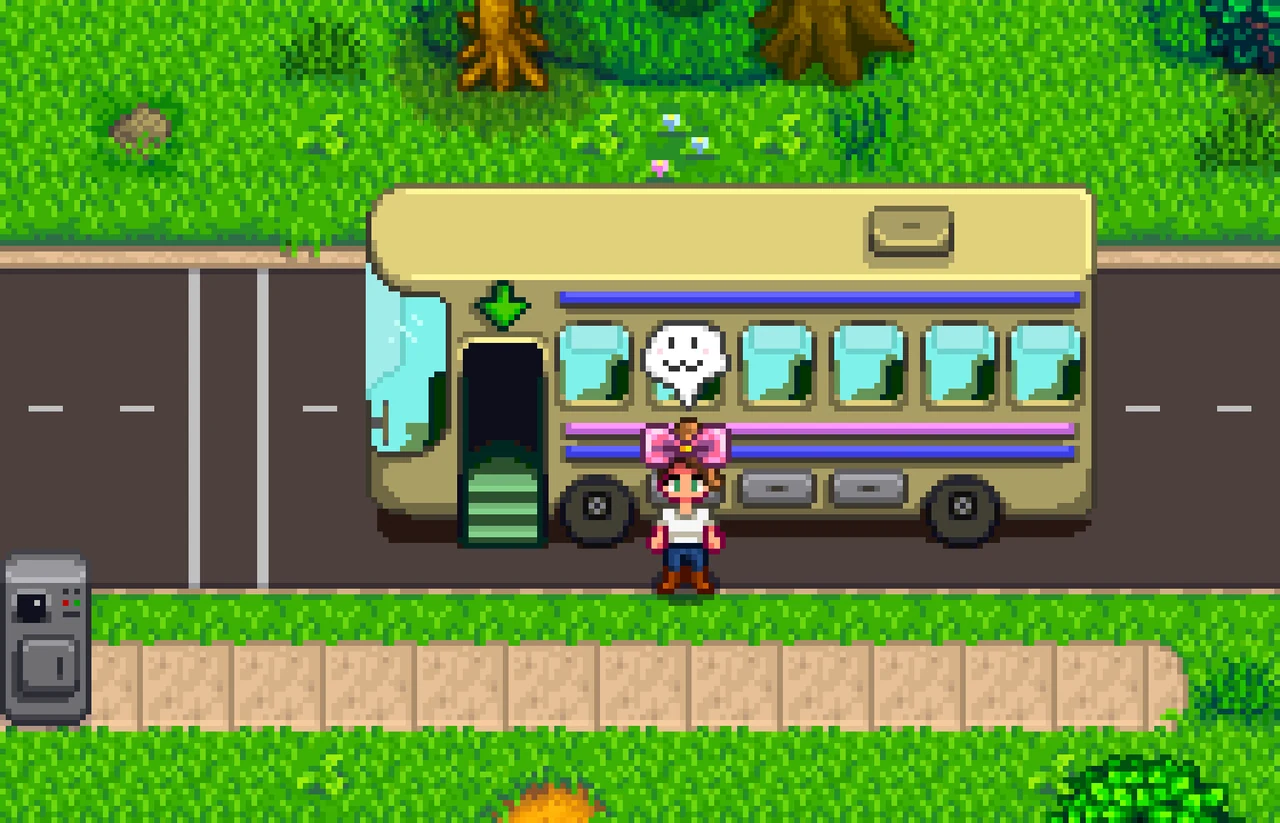
Every single morning, load your machines FIRST: refilling kegs and jars is the best-paid half hour in the whole game. Then, before you’ve repaired the bus, go fishing (about 1,800g a day early on). After the bus, go to Skull Cavern (12,000g and up a day, and lucky staircase dives can reach 75,000g). On bad-luck days, fish instead. And when a festival like the Egg Festival rolls around, it beats any grind you could do that day.
1Your farm pays you twice
Think of every day as two paychecks. The first one is passive: crops, kegs, jars, animals, and fish ponds earn the same amount whether you go fishing, diving, or pass out at 2 a.m. The second one is your active time, and that is the only part your choices change. Early in Year 1 the passive side is tiny (about 200–600g a day), but by Year 2 a big farm makes 30,000–90,000g a day on its own. So late in the game, almost any plan works. That doesn’t mean every plan is equally good!
2The default for every stage
- Early game (before the bus): fish. About 45 casts on the river or ocean pays 1,000–2,500g, more than mining (800–1,500g) or foraging (400–1,000g), and it levels your fishing skill. Mining still matters for ore, because five gold bars build a Crystalarium that pays forever.
- Mid game (bus repaired): Skull Cavern. Even without staircases, a decent-luck day pays 8,000–16,000g. Fishing drops to the backup plan at 3,000–6,000g.
- Late game: lucky staircase dives. With 50+ staircases, Spicy Eel, and bombs, a lucky dive pays 25,000–75,000g. An ordinary Skull Cavern day still pays 15,000–25,000g.
Let the TV pick your dive days. Skull Cavern reads daily luck (ladders, ore, treasure floors), but fishing and machines barely care. Check the Fortune Teller at 6 a.m.: good luck means dive, bad luck means fish or restock. Our luck guide shows exactly how much that habit is worth.
3Machines first, ALWAYS
Loading a keg takes about five seconds and adds 656g of value when you make pumpkin juice, which is roughly 130g per second of work. Nothing else in the game pays like that. The catch is that it only lasts a little while: even a 200-keg shed is loaded in under half an hour. So treat it like a toll you collect every morning, not something to fit in when you have time.
Skipping one round of keg loading to squeeze half an hour more out of a dive is the most expensive mistake in this whole guide. It can cost you around 100,000g of weekly output to earn about 1,500g of extra mining.
4Days the calendar decides for you
- Egg Festival (Spring 13): strawberry seeds at 100g, plantable the next day. In Year 1, arrive rich and leave broke!
- Stardew Valley Fair (Fall 16): trade 2,000 tokens for a Stardrop, a permanent +34 energy.
- Night Market (Winter 15–17): submarine fishing, a free painting, and the coal boat.
- Desert Festival (Spring 15–17, 1.6): Calico Eggs buy vendor stock, mixed seeds included, and you skip the bus fare.
- Green Rain (summer, 1.6): free hardwood, fiber, and moss everywhere. Drop everything and chop!
| Your stage | Default activity | Gold per day |
|---|---|---|
| Early (no bus) | Fishing | 1,000–2,500g |
| Mid (bus fixed) | Skull Cavern, no staircases | 8,000–16,000g |
| Late | Lucky staircase dive | 25,000–75,000g |
| Any stage, bad luck | Fishing or restocking | stage-dependent |
Our very serious colleagues at The Gem Sea Journal priced a day of your life at every stage of the game, passive floor and calendar included. Bring coffee.